
Considering the regular power outages in South Africa, it’s crucial to have a reliable backup power solution for essential household appliances like fridges. Keeping your food fresh during an outage not only avoids wastage but also ensures safety. Here, we’ll explore various options to provide backup power for your fridge, along with practical considerations to help you make an informed decision.
Understanding Your Fridge’s Power Requirements
Before you select a backup power solution, it’s essential to know how much power your fridge consumes. Most fridges use between 100 to 800 watts, depending on their size, design, and efficiency. Check the specification label usually found inside the fridge or refer to the user manual to identify the exact power requirements.
Types of Backup Power Solutions
There are several options available for providing backup power for your fridge during outages. Here are the most common:
1. Uninterruptible Power Supply (UPS)
A UPS is a battery backup system designed to provide immediate power in the event of an outage. It automatically switches on when the power goes out, making it a seamless solution. However, a standard UPS may only run smaller fridges for a limited time, generally between 15 minutes to a few hours, depending on the battery capacity and fridge consumption.
2. Portable Generator
A portable generator can provide power for more extended periods in case of an outage. There are petrol, diesel, and gas-powered generators available. While they can handle the power required by most fridges, it’s crucial to ensure proper ventilation while using a generator to prevent carbon monoxide buildup. Generators also require regular maintenance and fuel management.
3. Solar Backup Systems
Solar-powered battery systems are an eco-friendly option for backup power for your fridge. They involve installing solar panels to charge batteries that power your fridge during outages. While the initial setup costs may be higher, you can save on electricity in the long run. Additionally, good sunlight exposure is key to maintaining battery life and efficiency.


4. Inverter System
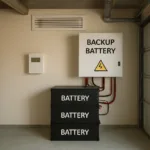
An inverter can convert DC power from batteries into AC power used by your fridge. This is typically coupled with a battery bank. An inverter system can provide a reliable power source as long as the batteries are adequately rated for your fridge’s power requirements. Similar to solar systems, these also have initial cost factors but can be cost-effective in long-term use.
Choosing the Right Solution
Selecting the right backup power solution for your fridge depends on several factors:
- Power Needs: Assess your fridge’s wattage and consider any other devices you might want to power during an outage.
- Duration of Outages: If outages are frequent and prolonged, a generator or solar system might be better suited.
- Budget: Consider both initial setup costs and long-term operating costs. Sometimes cheaper upfront options may require more maintenance and higher electricity bills.
- Space: Ensure you have enough space for the system you choose, especially for generators and solar panels.
- Usage Frequency: If outages are rare, a portable generator may suffice, while more frequent outages beg for a more permanent solution.
Installation and Maintenance
If you opt for a generator or solar system, professional installation is highly recommended to ensure safety and efficiency. For inverter systems, one should follow manufacturer’s guidelines and check that cables and batteries are correctly configured to avoid overheating and other hazards.
Regular maintenance is vital to ensure that backup systems function optimally. This includes checking battery life, testing power capacities, and ensuring minimal wear on generators due to fuel issues.
Common Mistakes to Avoid
When selecting backup power for your fridge, it’s easy to make some common mistakes:
- Underestimating Power Needs: Choose a backup solution that can handle your fridge’s wattage, plus any additional appliances you might want to run.
- Ignoring Safety Regulations: Generators must be used properly to avoid hazards. Always use them in well-ventilated areas and away from flammable materials.
- Neglecting Maintenance: Failing to maintain your backup power source can lead to malfunctions when you need it most.
Frequently Asked Questions
What is the best backup power solution for a fridge?
The best option depends on your power needs and outage frequency. A UPS is great for short outages, while a generator or solar system is better for longer ones.
Can I use a portable generator to power my fridge?
Yes, portable generators are capable of powering fridges, but ensure that the generator’s wattage is sufficient to match your fridge’s requirements.
How long can a UPS power my fridge?
The duration a UPS can power a fridge varies based on its capacity and the fridge’s power consumption, often ranging from 15 minutes to a few hours.
Are solar systems worth the investment?
Solar systems have higher initial costs but may save money on electricity in the long run. They are also environmentally friendly.

Kagiso Maseko is an author at Maventaro who writes about practical and affordable solutions for South African homes. His articles help readers make informed decisions about backup power, water storage, internet connectivity, home maintenance and everyday savings.