
In South Africa, energy efficiency is becoming increasingly important as households face rising utility costs and intermittent power supply. Thankfully, there are several low-cost home improvements that can significantly reduce energy waste without breaking the bank. From simple adaptations to DIY projects, homeowners can implement changes that will not only save energy but also contribute to more sustainable living.
Insulation: Keep the Climate In
One of the most effective ways to reduce energy consumption is by improving your home’s insulation. Poorly insulated homes often require excessive heating in winter and cooling in summer, leading to higher electricity bills.
Consider insulating your roof and external walls. You can use locally available materials like fiberglass or foam boards, which can be installed as a DIY project. Ensure that openings around windows and doors are well-sealed with weatherstripping or caulking to prevent drafts. This not only retains temperature but also enhances comfort inside the home.
Energy-Efficient Lighting
Switching to energy-efficient LED bulbs is another simple yet effective improvement. LEDs consume significantly less energy than traditional incandescent bulbs and last much longer.
Replacing just a few key bulbs such as those in frequently used rooms can lead to noticeable savings on your electricity bill. Additionally, consider installing dimmer switches or motion sensors in areas like hallways or bathrooms where lights might otherwise be left on unnecessarily.
Smart Power Strips
Many household appliances continue to draw power even when turned off, a phenomenon known as phantom load. Smart power strips can help eliminate this waste by cutting power to devices that are not in use.


Investing in smart power strips can be done at a relatively low cost, and they often come with features that allow you to control multiple devices at once. Using these strips not only reduces energy waste but can also prolong the lifespan of your electronics.
Water Saving Devices
Reducing hot water usage not only saves water but also cuts down on energy required to heat it. Installing low-flow showerheads and faucet aerators is an effective low-cost improvement.
These devices can be easily fitted to existing taps and showers, significantly lowering water consumption without sacrificing pressure. Additionally, consider insulating your geyser and the first few meters of hot water pipes to prevent heat loss.
Strategic Ventilation
In South Africa’s warm climate, proper ventilation can help regulate indoor temperatures. Creating cross ventilation can naturally cool your home, reducing the need for air conditioning.
To achieve this, open windows on opposite sides of your home to allow a breeze to flow through. Shade can also be improved by using exterior shading devices like awnings or planting trees strategically to block direct sunlight. These measures help maintain comfortable temperatures while keeping energy usage low.
Appliance Upgrades
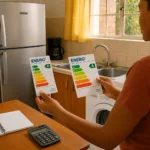
While upgrading appliances can come with a higher upfront cost, many energy-efficient models offer long-term savings through reduced energy consumption. Look for appliances with the Energy Efficiency label, which indicates lower operating costs.
Prioritise replacing old, inefficient appliances when they need repairs. Refrigerators and washing machines can be particularly energy-hungry, and investing in more efficient models can dramatically lower utility bills over time.
Regular Maintenance Practices
Lastly, regular maintenance of major home systems like heating, ventilation and air conditioning (HVAC) units can dramatically improve their efficiency. Change filters regularly and schedule service checks to keep equipment running smoothly.
For hose pipes and geysers, ensure there are no leaks. Even small drips can waste a significant amount of water and energy over time. By conducting regular checks and maintenance, you can keep operating costs low and improve efficiency.
Frequently Asked Questions
What are the most effective low-cost energy saving home improvements?
Improving insulation, switching to energy-efficient lighting, and installing water-saving devices are some of the most effective low-cost improvements.
How much can I save with these improvements?
While savings vary by household, many homeowners report reductions of up to 30% on their energy bills after implementing several energy-saving measures.
Can I do these improvements myself?
Many of the suggested improvements, like sealing drafts or changing light bulbs, can be done as DIY projects. For more complex tasks, consider hiring a professional.
What should I prioritize first?
Focus on insulation and sealing drafts first, as these create significant energy loss. Appliances can be upgraded later as needed.
Are there any municipal incentives for energy-efficient upgrades?
Some municipalities may offer rebates or incentives for energy-efficient home improvements. Check with your local council for available programs and financial assistance options.

Kagiso Maseko is an author at Maventaro who writes about practical and affordable solutions for South African homes. His articles help readers make informed decisions about backup power, water storage, internet connectivity, home maintenance and everyday savings.