
Prevent damp walls in South African homes by understanding that wall moisture usually comes from one of three causes: penetrating damp, rising damp, or condensation. The same patch of damage can look similar at first, but the source, the wall construction, and the property’s condition all shape the right response. For general background, see Rammed earth on Wikipedia.
In South African homes, damp can appear after seasonal rains, during humid coastal weather, or where ventilation is poor indoors. A careful approach helps homeowners and tenants spot warning signs early, document the problem properly, and decide when professional assessment is needed.
prevent damp walls in South African homes
Penetrating damp usually happens when water enters through a roof, crack, window frame, exterior wall, or faulty plumbing. It often appears on one side of a wall or in a localised area, and it may become worse after rain or when water is used nearby.
Rising damp is linked to moisture moving up from the ground through the wall material. It is commonly discussed in relation to older buildings or properties with compromised damp-proofing, but it should not be assumed from appearance alone. Condensation is different again, and it is more likely where warm indoor air meets cooler wall surfaces in rooms with limited airflow.
Why appearance alone is not enough
Peeling paint, bubbling plaster, flaking finishes, and dark patches can happen with more than one type of damp. A musty odour, soft plaster, or recurring mould may point to a moisture problem, but the visible sign does not confirm the source.
That is why a useful first step is observation rather than guesswork. The pattern of when and where the damp appears often gives stronger clues than the stain itself, especially in homes that experience changing weather, plumbing use, or poor ventilation.
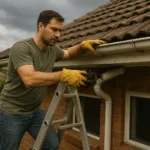


How to read the signs of damp walls
Homeowners and tenants can begin by noting whether the patch worsens after rainfall, heavy cooking, showers, laundry drying indoors, or use of nearby taps and pipes. If the mark grows after rain, penetrating damp becomes more likely. If it appears after a bathroom or kitchen is used, moisture from poor ventilation or plumbing may be involved. Related reading: What to Check Around Your Home After Heavy Rain and Strong Winds.
Location also matters. Damp at the base of a wall may suggest a different issue from moisture around a window lintel, near a chimney breast, or along an exterior corner. In coastal areas with higher humidity, condensation may be more common, while inland homes may see different seasonal patterns depending on local rainfall and temperature changes.
Symptom-versus-possible-cause checklist
The checklist below can help organise observations before a repair is planned. It is not a diagnosis, but it can make it easier to explain the problem to a landlord, insurer, or qualified professional.
- Peeling paint near a ceiling or window: possible penetrating damp, condensation, or a leaking fitting.
- Damp patch that appears after rain: possible water entry from the exterior wall, roofline, or opening.
- Moisture near a bathroom, kitchen, or laundry area: possible plumbing issue or high indoor humidity.
- Patch at the bottom of a wall: possible rising damp, plumbing leak, or ground-related moisture.
- Musty odour or recurring mould: ongoing moisture problem that needs investigation, not just repainting.
- Efflorescence or white powdery deposits: moisture movement through masonry may be present.
These signs can overlap, which is why a careful inspection matters. A wall may suffer from more than one moisture source, especially in older properties, coastal homes, or houses where maintenance has been delayed.
South African conditions that can make damp worse
South Africa does not have one uniform climate, so damp risk varies by region. Coastal humidity can encourage condensation indoors, while areas with seasonal rainfall may see exterior water ingress after storms. Inland regions may experience different temperature swings, which can also affect how moisture forms on colder wall surfaces.
Building design is equally important. Homes with limited cross-ventilation, blocked airbricks, sealed rooms, or poorly maintained gutters can trap moisture. A property’s age, wall construction, and past repairs all influence how water behaves and where it shows up.
Ventilation and moisture control
Good ventilation helps reduce condensation and slows the build-up of indoor moisture. Opening windows when weather allows, using extractor fans where fitted, and avoiding the long-term drying of clothes inside enclosed rooms can all help reduce humidity.
Ventilation does not fix every damp problem on its own, but it can reduce recurring surface moisture and mould growth. If a room repeatedly feels cold, smells stale, or fogs up after normal household use, airflow and humidity control deserve attention alongside the wall itself.
Safe first checks to make before arranging repairs
Initial checks should stay simple and safe. A homeowner or tenant can look for visible water staining, cracked render, damaged sealant around windows, overflowing gutters, leaking taps, loose roof tiles seen from ground level, and signs of trapped moisture near bathrooms or kitchens.
It is best to avoid invasive or risky actions without the right knowledge. Drilling into walls, opening sealed building elements, or applying chemicals without understanding the source can make the problem harder to solve. If the damp is widespread or the wall sounds hollow, cracks are widening, or finishes are breaking away, professional assessment is the safer option.
What to document
Clear records help when speaking to a landlord, body corporate, insurer, or building professional. Photos should show the wall, the wider room or exterior area, and the date if possible. Notes should include when the patch first appeared, whether it changes after rain, and whether it worsens after showers, cooking, or laundry use.
It is also useful to record any smell, mould recurrence, water dripping, staining, or damage to furniture and skirting boards. This information can help establish whether the issue is linked to weather, plumbing, ventilation, or a recurring building defect.
Owner-versus-tenant reporting note
For tenants, damp should be reported promptly in writing to the landlord or managing agent, especially if the patch is growing, producing mould, or appearing after rainfall. The report should describe the location, size, timing, and any visible damage, without trying to force a diagnosis.
For owners, the same information is useful for contractors and insurers. Owners should avoid relying on a cosmetic fix alone, because repainting does not resolve a moisture source. In many cases, the wall must be assessed first so that the correct repair approach can be chosen for the property’s condition.
What each party should note
Tenants should keep copies of messages, photographs, and any maintenance requests. If moisture seems to relate to a leak, ventilation failure, or building defect, early reporting helps protect the property and the tenant’s record of responsibility.
Owners should arrange inspection of repeated damp, especially where there is suspicion of hidden water ingress, structural movement, or compromised waterproofing. A problem that returns after cleaning or repainting usually means the source has not been addressed properly.
When visible mould needs extra caution
Visible mould is a warning sign of ongoing moisture, but it should be handled cautiously. Improving ventilation and reducing dampness are important first steps, while extensive contamination, hidden water ingress, or repeated regrowth should be assessed professionally.
Unsafe chemical mixtures should not be used in an attempt to remove mould. Harsh cleaning without fixing the underlying moisture can leave the problem returning, and it may also increase exposure to irritants. If mould is spreading across large areas, affecting insulation or ceilings, or appearing behind wall linings, a qualified professional should investigate.
When to seek professional assessment
Professional help is advisable when damp covers a large area, when there is suspected structural damage, or when the cause remains unclear after basic checks. A qualified building or waterproofing professional can assess the wall construction, the condition of the property, and the most likely entry point for moisture.
This matters because treatments depend on the source, not just the stain. A solution that suits a leaking exterior wall will differ from one used for condensation or moisture rising from the ground. The wrong repair can waste money and delay a proper fix.
How different damp problems are usually approached
Penetrating damp is often investigated by checking for failed exterior finishes, cracks, damaged pointing, leaking pipes, faulty gutters, and gaps around openings. Rising damp is assessed in relation to wall base conditions, ground levels, and the building’s damp-proofing history. Condensation is usually approached through better ventilation, humidity control, and reducing indoor moisture sources.
No single treatment suits every property. The wall material, the age of the home, previous repairs, and the local climate all influence what an appropriate solution looks like. A careful diagnosis is therefore more valuable than a quick cosmetic patch.
Why repainting alone is not enough
Fresh paint can improve appearance, but it does not stop moisture from entering or condensing inside the wall. If the underlying issue remains active, staining and blistering can return, sometimes more quickly than before.
That is why the priority should be source identification, followed by suitable repairs and moisture control. Decorative finishes are usually the final step, not the first one, and they work best once the wall has genuinely dried and the cause has been corrected.
Practical habits that reduce future damp risk
Regular maintenance can lower the chance of damp returning. Gutters should be kept clear, bathroom and kitchen ventilation should work properly, and exterior cracks or damaged sealants should be noticed early. Small maintenance issues often become larger moisture problems if ignored across more than one season.
Households should also pay attention to indoor routines that add moisture. Drying laundry in closed rooms, keeping windows shut all the time, or blocking airflow with furniture against exterior walls can make condensation more likely. Simple habits, combined with seasonal checks, often make a meaningful difference.
For South African homes, the best defence against damp walls is careful observation, timely reporting, and the right assessment before repair. Once the source is understood, a practical solution can be chosen that suits the property rather than masking the symptoms.

Kagiso Maseko is an author at Maventaro who writes about practical and affordable solutions for South African homes. His articles help readers make informed decisions about backup power, water storage, internet connectivity, home maintenance and everyday savings.