
Lower household electricity use often starts with small daily habits rather than new purchases. For South African families, the most practical changes usually involve cooking, lighting, laundry, ventilation, and standby use, while keeping comfort and safety in mind for everyone at home. For general background, see Mains electricity on Wikipedia.
This list groups simple actions by room and routine. It also distinguishes electricity use from what appears on a bill, since prepaid and postpaid arrangements can be affected by different tariffs, fees, and household patterns over time.
Kitchen habits that help lower household electricity use
The kitchen is often one of the easiest places to reduce unnecessary electricity use without changing appliances. Careful habits with kettles, cooking and refrigeration can make a noticeable difference over a normal month, especially when the same routines are repeated daily.
These changes should stay within manufacturer instructions and ordinary food-safety practice. They are not about adding equipment or altering wiring, but about using existing appliances more thoughtfully and only for as long as needed.
- Boil only the amount of water needed in the kettle, rather than filling it to the top every time.
- Use lids on pots when cooking, so heat is retained and meals can cook more efficiently.
- Match the pot size to the plate size where practical, so heat is not wasted around the edges.
- Keep the refrigerator door closed as much as possible, and plan what is needed before opening it.
- Check door seals regularly for obvious gaps, dirt or wear, since a poor seal can let cold air escape.
- Defrost frozen food in the fridge when appropriate, following safe food-handling guidance and appliance instructions.
- Avoid opening the oven repeatedly while food is cooking, because heat is lost each time the door opens.
Meal planning can also help. Preparing ingredients before switching appliances on can reduce the time that ovens, stoves and kettles stay in use. It is especially useful when several people share the kitchen and appliances are opened or turned on more often than necessary.
Laundry routines that can reduce waste
Laundry habits matter because washing and drying often happen several times a week in many homes. Even without buying a more efficient machine, households can use existing equipment more carefully by grouping loads and choosing the settings recommended by the manufacturer.

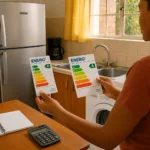

It is also sensible to avoid unnecessary repeat cycles. A machine that is partly filled for several small washes usually uses more electricity and water over time than a well-planned load, even though the exact effect will vary by household and appliance type. Related reading: How to Track Household Electricity and Water Use Each Month.
- Wait for a reasonably full load before starting the washing machine, where fabric care allows it.
- Select the programme and temperature recommended on the appliance or garment care label.
- Use spin settings appropriately, since better water removal can shorten drying time afterwards.
- Whenever weather and space allow, air-dry washing instead of using a heated drying cycle.
- Keep the washing machine load balanced to avoid extra cycles or poor cleaning results.
- Clean lint or residue from filters only as described by the manufacturer.
During cooler or wetter periods, drying indoors may be necessary, but the household should still prioritise ventilation. Clothing should be dried in a way that avoids damp build-up, mould and blocked airflow, particularly in small rooms or areas used by children and older people.
Lighting habits that help lower household electricity use
Lighting is often one of the simplest areas to manage. Rooms that are empty, over-lit or lit unnecessarily during daylight can add to electricity use without improving comfort, especially in homes where several people move between spaces throughout the day.
Natural light should be used where it is safe and practical. This is especially relevant in South Africa, where many households can make use of daylight for large parts of the day, provided glare, heat and privacy are still managed sensibly.
- Switch lights off when leaving a room, even briefly, if the space will be empty.
- Use daylight during daytime hours by opening curtains or blinds where privacy and safety allow it.
- Close curtains or blinds when heat or glare becomes uncomfortable, particularly in strong sun.
- Use task lighting only where it is needed, rather than lighting an entire room for one activity.
- Keep lampshades, windows and light fittings clean, since dust can reduce brightness and lead to unnecessary extra lighting.
Families sharing a home may benefit from agreeing on a simple lighting routine. For example, one person can be responsible for checking rooms at bedtime or after meals, reducing the chance that lights remain on in unused spaces.
Living-space habits that support comfort without excess use
Living areas often contain televisions, decoders, game consoles and chargers that remain powered even when nobody is actively using them. Standby operation may seem minor in the moment, but it can continue throughout the day and night if habits do not change.
At the same time, comfort should not be sacrificed. During hot weather, safe airflow and shade may be more helpful than repeatedly switching appliances on and off. During cold weather, the household should balance warmth with sensible use of available heating methods and proper supervision.
- Switch off televisions, decoders and similar devices fully when they are not in use, rather than leaving them on standby unnecessarily.
- Charge phones or other small devices only when needed, and remove them once charging is complete.
- Unplug non-essential items only where it is safe and convenient, but do not unplug essential medical or safety equipment.
- Use curtains, shade and cross-ventilation to make rooms more comfortable before relying on electric cooling or heating.
- Open windows when outdoor air is suitable, but keep security and household safety in mind.
In homes with children, older people or vulnerable residents, comfort and safety must come first. Room temperature, hydration, ventilation and rest should be managed carefully, especially during very hot or cold periods. If a household member depends on electrical medical equipment, that equipment should remain connected according to its instructions.
How to track whether habits are making a difference
Electricity use and the amount charged on a bill are not always the same thing. Prepaid and postpaid arrangements can reflect different tariff structures, fixed fees and household activity, so one month’s result does not automatically prove that a single habit caused the change.
A more reliable approach is to track everyday patterns over a reasonable period. Households can note usage habits, compare similar weeks, and look for trends rather than expecting instant or guaranteed savings from any one action.
- Choose a simple starting point, such as one week of normal habits.
- Record key routines: kettle use, laundry loads, lighting hours and standby habits.
- Change one or two habits at a time so the effect can be observed more clearly.
- Compare usage over several weeks instead of focusing on a single day or bill.
- Note whether weather, visitors or school holidays changed the household routine.
This kind of tracking helps separate behaviour from other influences on the bill. It also makes it easier for families to see which habits are realistic enough to keep going without causing discomfort or frustration.
Short habit-tracking checklist
A simple checklist can help households stay consistent without adding cost or complexity. It works best when kept near the kitchen or living area, where daily routines are easy to remember and review.
The aim is not perfection. The aim is to build steady habits that lower household electricity use in ordinary life, while keeping cooking, comfort and safety practical for everyone at home.
- Did the kettle contain only the needed amount of water?
- Were pot lids used during cooking where appropriate?
- Were the refrigerator door and seals checked for obvious problems?
- Were lights switched off in empty rooms?
- Were televisions and other devices fully switched off when not needed?
- Was laundry grouped into sensible loads and dried in the most practical way?
- Were natural light and ventilation used when safe and comfortable?
When repeated regularly, these routines can help a household use electricity more thoughtfully without replacing appliances. The most effective results usually come from consistency, not from one dramatic change.

Kagiso Maseko is an author at Maventaro who writes about practical and affordable solutions for South African homes. His articles help readers make informed decisions about backup power, water storage, internet connectivity, home maintenance and everyday savings.