
Understanding the safe uses of rainwater collected at home matters for South African households that rely on tanks or containers during water interruptions. Rainwater can be useful for several non-drinking tasks, but it is not automatically clean, and the storage system makes a major difference to its quality.
The safest approach is to treat harvested rainwater as a backup resource for low-risk household tasks unless a qualified specialist has assessed the installation and local requirements. Roof debris, bird droppings, standing water, sunlight and poor tank covers can all affect water quality, especially when water is stored for long periods.
What harvested rainwater is usually suitable for
For many homes, rainwater is best reserved for outdoor and non-food uses. It may be suitable for garden watering, washing patios, cleaning outdoor surfaces and other tasks where the water does not need to meet drinking-water standards. Where the installation has been planned properly, it may also be used for toilet flushing.
These uses still depend on good household practices and the condition of the storage system. A covered tank, a clean collection area and sensible storage times all reduce the chance of unpleasant odours, algae growth and contamination. Rainwater should still be viewed as untreated water, not as a direct substitute for treated municipal supply.
Typical lower-risk uses
Common lower-risk uses include watering lawns, flower beds and established shrubs, as well as cleaning outdoor tools, paving and garden furniture. Rainwater can also help during short municipal interruptions when the water is used only for tasks that do not require potable quality.
Toilet flushing is often listed among practical household uses, but only where the plumbing has been designed or assessed for that purpose. The system must match local rules and should be professionally checked if rainwater is being connected into the dwelling rather than used only outdoors.
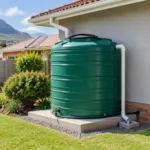


Safe uses of rainwater collected at home: what needs specialist advice
The phrase safe uses of rainwater collected at home does not mean that every non-drinking use is automatically acceptable in every home. Some uses need more caution because the water may come into contact with people, surfaces inside the house or the municipal plumbing system.
Specialist advice is advisable where rainwater is intended for indoor plumbing, where a pump or automated system is involved, or where local municipal rules may require separation and backflow protection. The same applies if a household wants to use stored rainwater for bathing, dishwashing or food preparation, because those uses involve a higher level of exposure and water-quality concern.
Acceptable use versus seek-specialist-advice
Generally acceptable, with sensible housekeeping: watering gardens, washing exterior surfaces, cleaning outdoor equipment and, where appropriately installed, flushing toilets. These uses are still dependent on safe storage and local conditions, and they should not be assumed suitable if the water has been standing for a long time or the tank has been left uncovered.
Seek specialist advice first: using harvested rainwater for drinking, preparing food, making beverages, bathing, or connecting tank water into a home’s drinking-water pipes. These uses require proper assessment, local permission where relevant, and confirmation that the system meets separation and backflow requirements.
Why rainwater quality can change so quickly
Rainwater is only as clean as the roof, gutters, storage container and surrounding environment that it passes through. Roof debris can include dust, leaves, insects and droppings, while wind-blown dirt may collect after dry spells. The first water entering the system after rain can carry a surprising amount of material from the roof surface.
Storage conditions matter just as much. Sunlight can encourage algae growth in poorly protected tanks, while open or damaged lids make it easier for insects, small animals and dust to enter. Water that stands for long periods may also develop an odour or visible cloudiness, even if it looked clear when it first entered the tank.
Household factors that reduce quality
Bird droppings are a particular concern because roofs are exposed to regular contamination. Even when the rain looks clean, it may not be suitable for uses that require higher water quality. This is why rooftop harvested water should never be assumed safe for consumption without specialist guidance.
Storage time also changes the risk profile. Freshly collected rainwater may be better than water that has sat unused for weeks, but no simple visual check can confirm that it is safe for drinking or bathing. The condition of the tank, piping and collection surface all influence the final quality.
Low-risk housekeeping for tanks and collection areas
Simple maintenance can improve the usefulness of harvested water without creating unnecessary risk. Collection areas should be kept clear where they are safely accessible, and gutters should be checked for visible leaves, branches and other debris. A well-covered tank helps keep out insects, dust and sunlight.
Mosquito access should also be prevented by keeping lids fitted properly and closing any openings that are not needed. This is especially important in warm weather, when standing water can become a breeding place if the tank is poorly sealed. Household safety should always come first, so cleaning high roofs or unsafe access points should be left to a competent person.
Practical checks that are usually worth doing
A household can look for obvious damage to the tank cover, guttering and visible pipework. Signs of algae, sediment build-up or unusual smells are also worth noting, because they may indicate that the water should be limited to lower-risk uses only. If the system seems unreliable, it is better to reduce its use than to assume the water is fine.
Tank and pump maintenance matters across the year, not only in rainy seasons. A simple routine often helps preserve water quality and system performance, especially where households depend on stored water during interruptions. For broader planning and system upkeep, a useful starting point is how to maintain a household water tank and pump throughout the year.
When local rules and plumbing details matter
Rainfall patterns and restrictions vary across municipalities and regions in South Africa, so a system that works in one area may not be acceptable in another. Local permission, separation requirements and backflow protection can differ, particularly where rainwater is intended to enter a building’s plumbing.
Any tank water plumbed into a dwelling should be assessed by a qualified professional before use. That assessment should confirm whether the installation is allowed, whether it is properly separated from drinking-water pipes, and whether the relevant municipal requirements have been met. Untreated harvested rainwater should never be assumed to meet drinking-water standards.
Best household uses by risk level
The table below gives a practical overview, but it does not replace professional advice or local municipal rules. It is meant to help households think more carefully about likely uses and where caution is needed.
| Use | General risk level | What to remember |
|---|---|---|
| Garden watering | Lower | Usually suitable for outdoor plants, but quality still depends on roof, tank and storage conditions. |
| Outdoor cleaning | Lower | Useful for patios, tools and outdoor furniture where potable quality is not needed. |
| Toilet flushing | Moderate | Only where the installation has been properly designed and checked for local requirements. |
| Drinking or food preparation | Higher | Needs specialist quality advice; untreated rainwater should not be assumed safe. |
| Bathing or dishwashing | Higher | Seek specialist advice because the water may come into direct contact with people. |
Choosing the right expectations for a home backup system
Rainwater harvesting works best when households treat it as part of a wider backup plan rather than a universal water source. A system that supports outdoor cleaning and garden care can still be highly useful during shortages, load shedding-related pumping issues or municipal interruptions. The design should match the home’s needs and the local water environment.
Households comparing storage options, tank types and system layouts may also find it helpful to look at broader backup planning resources. A good overview of system choices is available in planning a reliable home water backup system in South Africa, while households weighing storage options can also compare plastic vs steel water tanks and consider choosing the right water tank size for your home.
A cautious way to use rainwater at home
The safest rule is simple: use harvested rainwater for lower-risk household tasks unless the system has been professionally assessed for anything more demanding. Keep the collection area as clean as is safely possible, keep the tank covered, and prevent mosquito access. These steps do not make untreated water safe to drink, but they do help protect the quality of the stored water.
Because municipal regulations differ and water intended for consumption needs specialist quality advice, households should avoid assumptions and check local requirements before expanding how the water is used. Rainwater can be a valuable backup resource, but its role should be defined by caution, practical maintenance and local compliance rather than by guesswork.

Kagiso Maseko is an author at Maventaro who writes about practical and affordable solutions for South African homes. His articles help readers make informed decisions about backup power, water storage, internet connectivity, home maintenance and everyday savings.